EPDM Flat Roofing in Washington, DC
Black rubber EPDM membrane flat roofing for Washington, DC garages, additions, and row-house flat sections — 60-mil Carlisle Sure-Seal with tape-bonded seams, 25–30 yr lifespan.
Why EPDM Flat Roofing in Washington, DC?
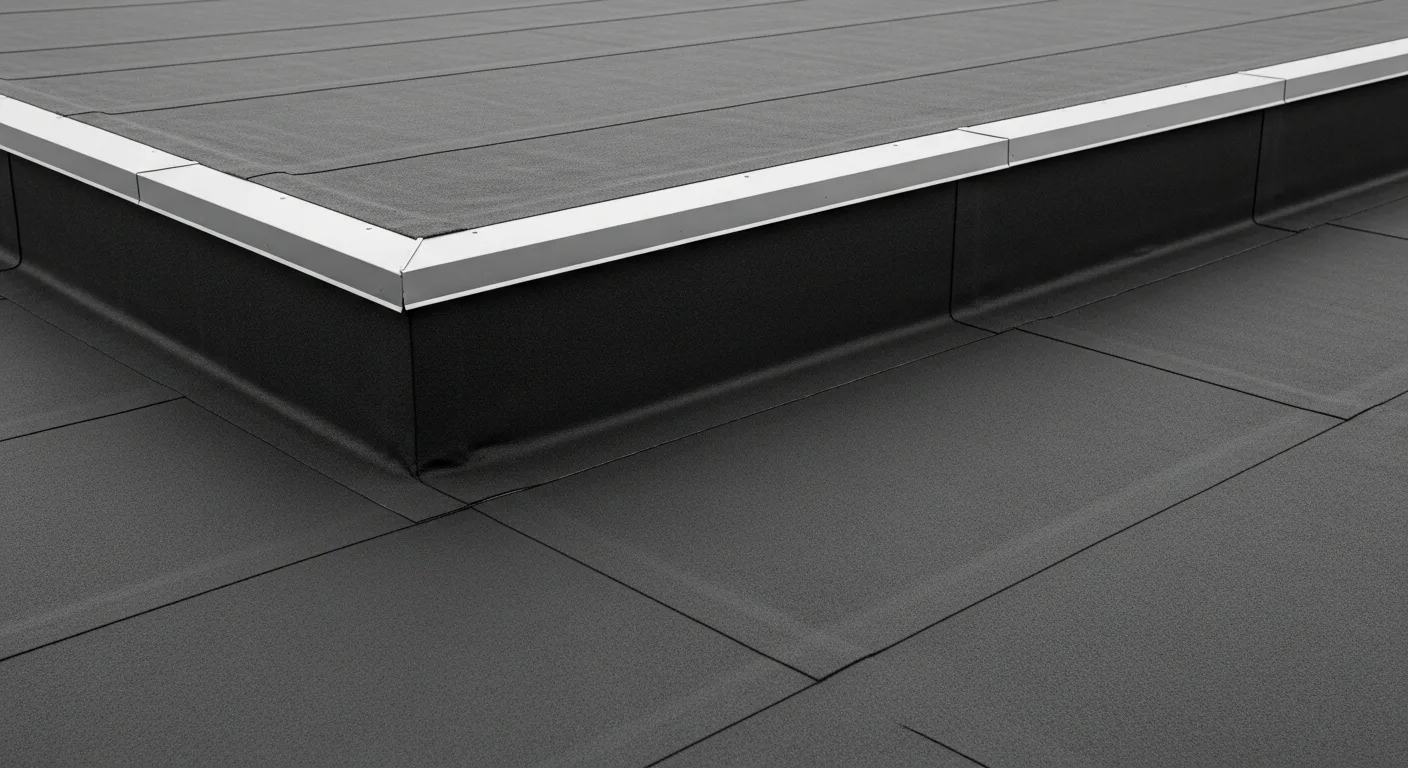
EPDM (ethylene propylene diene monomer), commonly called rubber roofing, has the longest performance track record of any single-ply membrane — installations from the early 1980s are still in service. It is the most economical single-ply option and is particularly appropriate for shaded flat sections where TPO's reflectivity advantage is minimized, or for hidden applications behind parapets.
We install 60-mil and 90-mil Carlisle Sure-Seal EPDM with modern tape-bonded seams — far more reliable than the liquid-adhesive seams common on pre-2000 EPDM installations. Fully adhered or mechanically fastened systems are specified based on substrate condition and wind-zone calculations. Every seam is probe-tested and inspected before the project is closed out.
EPDM: DC's Most Common Flat Roof Membrane
Washington DC is the EPDM capital of the mid-Atlantic. Virtually every DC row house built or renovated between 1970 and 2010 has a flat rear section covered with EPDM rubber membrane. This represents hundreds of thousands of square feet of aging EPDM across Capitol Hill, Columbia Heights, Petworth, Brookland, Shaw, and every other DC residential neighborhood — and the overwhelming majority of it is now reaching the end of its 20–30 year service life.
DC's most common existing membrane — virtually every DC flat section from 1970s–2010s used EPDM; massive replacement market as these age out; HPRB typically approves black EPDM without review. The sheer volume of EPDM replacement work in DC means King's Roofing crews know every common failure pattern specific to DC row-house construction — from improper party-wall terminations to drain sump compression issues.
Party Wall Flashing: The #1 source of DC row-house flat-roof leaks is improper party-wall cap flashing — the metal cap where the membrane terminates at the shared wall with your neighbor. We replace party-wall cap flashing on every DC EPDM job as a standard item, not as an optional upgrade.
Stairwell Bulkhead Integration: Many DC row houses have rear stairwell bulkheads — raised structures housing the stairway to the roof. The flashing integration between the bulkhead walls and the flat membrane is a common leak point. We custom-fabricate all bulkhead flashings for proper drainage.
DCRA Permits: DCRA building permit required for all DC roofing work. HPRB review typically not required for black EPDM replacement in DC historic districts — black EPDM is historically approved without review. King's manages all permit submittals.
What's Included in a King's Roofing EPDM Installation
- Full tear-off of existing membrane to structural deck — no installations over existing material
- Deck inspection and repair — all soft spots identified and replaced before membrane installation
- Tapered insulation upgrade where chronic ponding is identified — crickets added around drain sumps
- 60-mil Carlisle Sure-Seal EPDM — tape-bonded seams with primer (modern method — not liquid adhesive)
- Drain inspection and replacement — we inspect all internal drains and scuppers as a standard item
- Penetration flashings — HVAC curbs, pipe boots, conduit feet all custom-flashed
- Parapet and edge terminations — counter-flashing and metal termination bars at all roof edges
- 20-year manufacturer warranty registration — filed in the homeowner's name
Internal Links for Your Washington, DC Roofing Project
- Roofing in Washington, DC — full roofing services overview for Washington
- Flat & Low-Slope Roofing — all membrane options for Washington
- Free Phone Consultation — schedule a no-obligation estimate
- All Roofing Services — complete service menu for the DC metro
DC Contractor Licensing & Compliance
King's Roofing holds a current DC contractor license issued by the DC Department of Consumer and Regulatory Affairs (DCRA) Business License Division — required for all roofing and home improvement work in Washington, DC. Our DC contractor license number is displayed on every Washington DC proposal and contract. You can verify our license status through DCRA's online contractor verification portal before signing any agreement.
DC roofing law requires that any contractor performing repair or replacement work on a DC property hold a valid DC business license AND a DC home improvement contractor registration. King's Roofing maintains both, along with $2 million general liability insurance and workers' compensation coverage for all crew members working on DC properties.
When hiring any roofing contractor in Washington, DC, always request: (1) DC contractor license number, (2) proof of current general liability insurance, (3) workers' compensation certificate. King's Roofing provides all three on request before project commencement.
Common EPDM Flat Roof Failures in Washington, DC
EPDM's long track record doesn't make it immune to failure — understanding the most common failure modes helps you identify problems before they become costly interior water damage events on your Washington, DC property.
- Seam delamination (pre-2000 liquid-adhesive installations): EPDM installations from the 1980s and 1990s used solvent-based liquid adhesive at lap seams. This adhesive has a natural service life of 20–25 years, after which seams begin to lift and separate. Modern tape-bonded seams with butyl primer are far more durable — all King's Roofing EPDM installations use the modern tape-bond method.
- Drain sump ponding: Compressed insulation around drain bowls creates depressions where water ponds after rain. Chronic ponding — even the minor amounts common on slightly mis-sloped flat sections — significantly accelerates EPDM aging. Tapered insulation crickets around drain sumps restore positive drainage.
- Penetration flashing wear: HVAC curbs, pipe boots, and electrical conduit feet move seasonally with temperature changes. The membrane at these penetrations experiences more stress than the field membrane and will fail first without periodic inspection and re-flashing.
- Parapet cap-flashing separation: Metal cap flashing at parapet walls expands and contracts with temperature, eventually pulling away from the counter-flashing below. This exposes the membrane edge — the highest-risk leak path on any Washington flat roof.
King's Roofing inspects all four failure points at every Washington, DC flat-roof estimate — we document findings with photos and provide a written assessment distinguishing repair-eligible from replacement-required conditions.
EPDM Maintenance Schedule for Washington, DC Properties
Even a properly-installed EPDM roof benefits from a consistent maintenance schedule. King's Roofing recommends the following program for Washington, DC EPDM flat roofs:
- Spring inspection: After DC-metro winters produce freeze-thaw cycles that stress flashing terminations and parapet cap flashings. Inspect all seams, penetrations, and perimeter terminations after the final frost.
- Fall drain clearing: Before fall leaf-drop season clogs internal drains. Blocked drains lead to winter ice buildup at drain bowls — a common cause of drain flange failure and early-season leaks in March.
- Post-storm checks: After significant wind events (50+ mph gusts are common during spring and fall nor'easters in Washington), inspect parapet cap flashings and any recently patched areas.
- 5-year seam inspection: Every 5 years, conduct a systematic seam probe of all lap joints. Early seam lifting is typically a 30-minute repair; a failed seam that has allowed water infiltration for months requires deck replacement.
Annual maintenance programs for Washington, DC EPDM roofs include scheduled inspections, minor seam and flashing repairs, drain clearing, and priority storm-response scheduling. Ask us about maintenance plan options at your initial estimate.
Frequently Asked Questions — EPDM Flat Roofing in Washington, DC
What does EPDM flat roof replacement cost in Washington, DC?
60-mil EPDM flat roof replacement in Washington, DC runs approximately $6,500–$12,500 installed for typical residential flat sections (400–1,100 sq ft). This includes full tear-off, deck inspection and repair, new drain or scupper if needed, and tape-bonded seams with primer. EPDM is typically the most economical single-ply option — 10–15% less than TPO for the same application. Final pricing requires on-site inspection.
How long does EPDM roofing last in Washington, DC's climate?
60-mil Carlisle Sure-Seal EPDM with modern tape-bonded seams typically lasts 25–30 years in DC metro climates. Older EPDM with liquid-adhesive seams (pre-2000 installation) may begin failing at 20–25 years due to seam delamination. Annual inspection and drain maintenance are the two most important longevity factors.
Does black EPDM require HPRB approval in a DC historic district?
Black EPDM is the historically dominant membrane in DC's historic districts and is typically approved without HPRB review when replacing like-for-like. This is a key advantage over white TPO, which may require HPRB clearance in some historic district contexts. King's Roofing confirms HPRB review requirements for each specific property and manages the process when required.
How does DCRA permitting work for EPDM replacement on a DC row house?
DCRA building permits for residential flat roof replacement typically take 4–8 weeks from electronic submission. King's Roofing submits through DC Access eServices and follows up actively. For EPDM replacement in DC historic districts, HPRB review is generally not required — we confirm this for each property at the estimate stage. Permit cost is included in your project price.
My DC row house flat roof is only 12 years old but leaking. Can it be repaired?
Often yes. Seam separations, minor membrane punctures, and localized flashing failures can frequently be repaired without full replacement if the field membrane is structurally sound. King's Roofing performs a thorough moisture survey — walking the roof and probing suspect areas — before recommending repair versus replacement. A properly targeted repair costs a fraction of full replacement and can extend EPDM life by 8–15 years.
Ready to get a flat roof or metal roof estimate for your Washington, DC property? Call (703) 712-1506 or schedule a free phone consultation — we respond within one business day and can often inspect within the same week.