PVC Roofing in Springfield, VA
Premium heat-welded PVC membrane for flat roofs in Springfield — chemical-resistant, grease-rated, 30+ year lifespan. Residential & commercial installations.
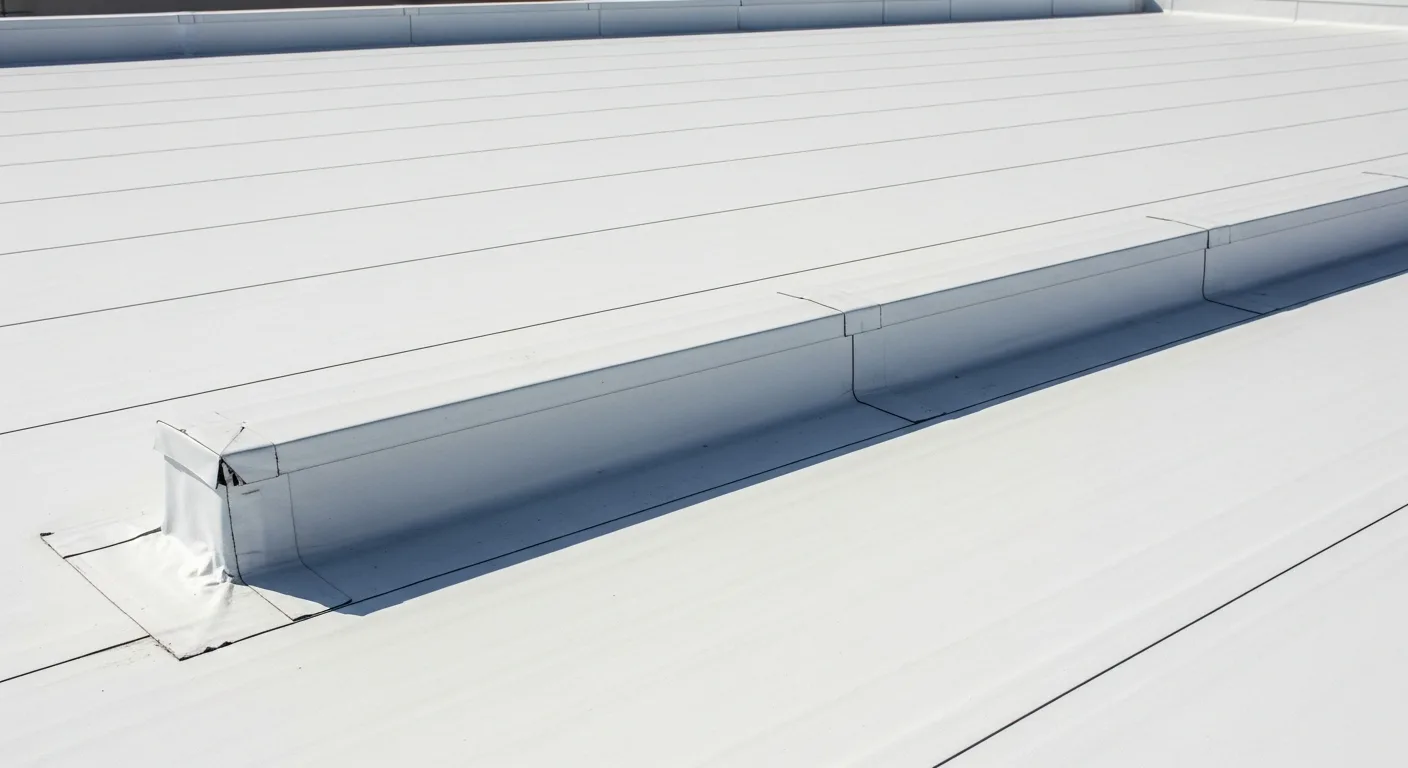
Why PVC Roofing in Springfield, VA?
Springfield's Backlick Road and Franconia Road commercial corridor has a mix of retail, food service, and office buildings with flat roofs that need PVC — particularly where restaurant and food-service tenants create grease exhaust conditions.
Springfield is unincorporated Fairfax County. Permits issued by Fairfax County Department of Land Development Services.
HOA/Historic District: Rolling Valley, Hunt Club Forest, Daventry, and several other Springfield communities have HOA ACC requirements for exterior material changes.
What Is PVC Roofing?
PVC (polyvinyl chloride) is the premium flat roofing membrane — more expensive than TPO or EPDM, but offering superior chemical resistance, grease resistance, and long-term seam integrity. PVC is the preferred system for restaurant and food-service buildings (where kitchen exhaust grease contacts the roof), industrial and chemical-adjacent applications, and high-rise commercial buildings where wind uplift performance is critical.
PVC seams are heat-welded — identical process to TPO — and are stronger than the field membrane when properly installed. Unlike EPDM (tape-bonded), PVC seams are factory-grade fused seams with no adhesive to degrade over time. PVC is also the most dimensionally stable membrane, with very low thermal movement compared to TPO.
PVC Cost in Springfield, VA (2026)
Residential PVC flat sections in Springfield run $10–$16 per sq ft installed. A 400 sq ft residential flat roof costs $4,000–$6,400. Commercial-scale PVC (2,000+ sq ft) runs $9–$14/sq ft at volume. PVC carries a 10–15% premium over TPO for equivalent thickness — justified on commercial applications, grease-exposure locations, and high-wind-zone buildings.
King's Roofing carries a 10-year workmanship warranty on all PVC installations alongside the manufacturer's system warranty. We hold commercial contractor credentials required for Fairfax County commercial PVC projects.
The PVC Installation Process
- Moisture survey — Core pull test or electronic scan to assess existing roof condition before specifying recover vs. tear-off.
- Tear-off — Full tear-off preferred for commercial projects. Recover permissible under specific code conditions.
- Insulation and slope — Tapered polyiso insulation to achieve positive drainage. Minimum 1/4" per foot per IRC.
- PVC membrane — Sheets unrolled and mechanically fastened per project wind-zone uplift calculation.
- Heat-welded seams — Hot-air robot welder used for all field seams and flashing welds. Seam temperatures and widths verified per manufacturer protocol.
- Flashing and termination — Compatible PVC flashing at all penetrations, parapets, curbs, and edges.
- Pull-test QC — All seams pull-tested before project closeout. Documentation provided for manufacturer warranty registration.
Comparing Flat-Roof Systems for Local Properties
PVC is the premium flat-roof membrane — 10–15% more expensive than TPO or EPDM, but delivering superior performance in three specific categories: chemical and grease resistance, heat-welded seam strength, and dimensional stability. For any application where kitchen grease, HVAC chemical discharge, or industrial solvents contact the roof surface, PVC is the only appropriate choice. For high-rise and high-wind-load commercial buildings, PVC's seam strength provides greater wind-uplift resistance than EPDM's tape-bonded seams.
For standard residential flat sections (garages, sunrooms, additions) with no chemical exposure, TPO at 60-mil is cost-effective and fully adequate. PVC is the step-up for: (1) any food-service or restaurant application; (2) commercial buildings over 10,000 sq ft where wind-uplift engineering requires maximum seam integrity; (3) industrial or chemical-adjacent applications; (4) high-end residential projects where the premium is justified by the building's value and the 30+ year service life.
PVC Warranty and Manufacturer Certification
King's Roofing installs Sika Sarnafil and Carlisle FleeceBACK PVC systems and carries manufacturer installer certification. Certified installation qualifies for full system warranty covering membrane, seams, and flashings — not just the field material. PVC manufacturer warranties are typically 15–20 years on the system; actual service life is 30+ years on well-maintained commercial installations. Our certification transfers to the new owner on property sale.
What to Expect: From Inspection to Completed PVC Roof
PVC projects begin with a moisture survey and a wind-uplift calculation for the specific building. The uplift calculation determines fastener spacing and membrane thickness — incorrectly specified systems fail in high-wind events. We provide the uplift calculation documentation with every commercial proposal. Installation for residential sections (300–600 sq ft) is typically 1–2 days; commercial projects are scheduled in phases with daily progress reporting. All seam welds are temperature-controlled and pull-tested. Permit closeout documentation and manufacturer warranty registration are provided at project completion.
Why King's Roofing for PVC Work
PVC seam welding is the most technically demanding of the three single-ply membrane types. Temperature variation of 10–15°F above or below the specification produces seam overburn or underburn — both invisible at installation, both producing failure within 5 years. King's uses calibrated hot-air robot welders and documents seam temperatures and pull-test results on every project. Our A+ BBB rating and 10-year workmanship warranty on all PVC installations back the quality we deliver on commercial and residential projects across the DC metro.
Annual Maintenance Recommendations for Your PVC Roof
PVC's heat-welded seams are the most durable of any single-ply membrane, but penetrations and parapet terminations require periodic inspection. King's Roofing recommends the following annual maintenance schedule for PVC installations: (1) Spring seam inspection — probe all field seams and T-joint welds for integrity. PVC seams do not fail from improper bonding agent degradation (as EPDM tape-bond can), but thermal cycling over decades can stress T-joints at lap terminations. (2) Penetration inspection — HVAC curbs, vent boots, and conduit feet flex independently of the membrane and are the most frequent failure point on PVC commercial roofs. Check each penetration annually for membrane lifting or boot cracking. (3) Grease trap inspection for commercial/restaurant properties — on restaurant and food-service buildings, inspect the area around kitchen exhaust boots quarterly. Even PVC-rated for grease has limits at sustained 300+ degree grease temperatures; pipe insulation prevents contact at the boot. (4) Post-storm inspection — large debris or foot traffic damage can puncture 60-mil PVC. We provide complimentary post-storm inspection under our commercial maintenance program. Ask about annual maintenance agreements at project closeout.
Internal Links for Your Springfield Roofing Project
Explore related roofing services for your Springfield property:
- Roofing in Springfield, VA — full roofing services overview for Springfield
- Flat & Low-Slope Roofing — related services across Northern Virginia
- Free Phone Consultation — schedule a no-obligation estimate
- All Roofing Services — complete service menu for the DC metro
Frequently Asked Questions — PVC Roofing in Springfield, VA
What does PVC roofing cost in Springfield, VA?
PVC for Springfield commercial corridor properties (Backlick Rd, Franconia Rd) runs $10–$16 per sq ft. Retail and restaurant buildings in the 1,000–4,000 sq ft range typically run $10,000–$64,000 for PVC installation.
Why choose PVC for Springfield commercial buildings?
PVC's heat-welded seams provide the strongest wind uplift resistance of any single-ply membrane — important in Springfield's I-95/I-395 interchange wind zone. For food service and restaurant tenants on Backlick Road, PVC's grease resistance is required.
Does Fairfax County permit PVC commercial roofing in Springfield?
Yes. Commercial roofing permits in Fairfax County require a building permit from the Department of Land Development Services. Commercial contractor credentials are required — King's holds them.
How long does PVC last on Springfield commercial buildings?
Quality 60-mil PVC lasts 30+ years. Commercial buildings with rooftop equipment and maintenance foot traffic benefit from 80-mil PVC specification.
Can PVC recover over existing Springfield commercial flat roofing?
Recover is permissible when the existing roof is sound and dry. King's conducts a moisture survey before recommending recover vs. full tear-off.
Ready for a PVC Roofing estimate in Springfield? Call (703) 712-1506) or schedule a free phone consultation — we respond within one business day and can often inspect within the same week.