PVC Flat Roofing in Washington, DC
Premium PVC membrane flat roofing for Washington, DC — chemical and grease resistant, heat-welded seams, 30+ year lifespan. Duro-Last custom fabrication available.
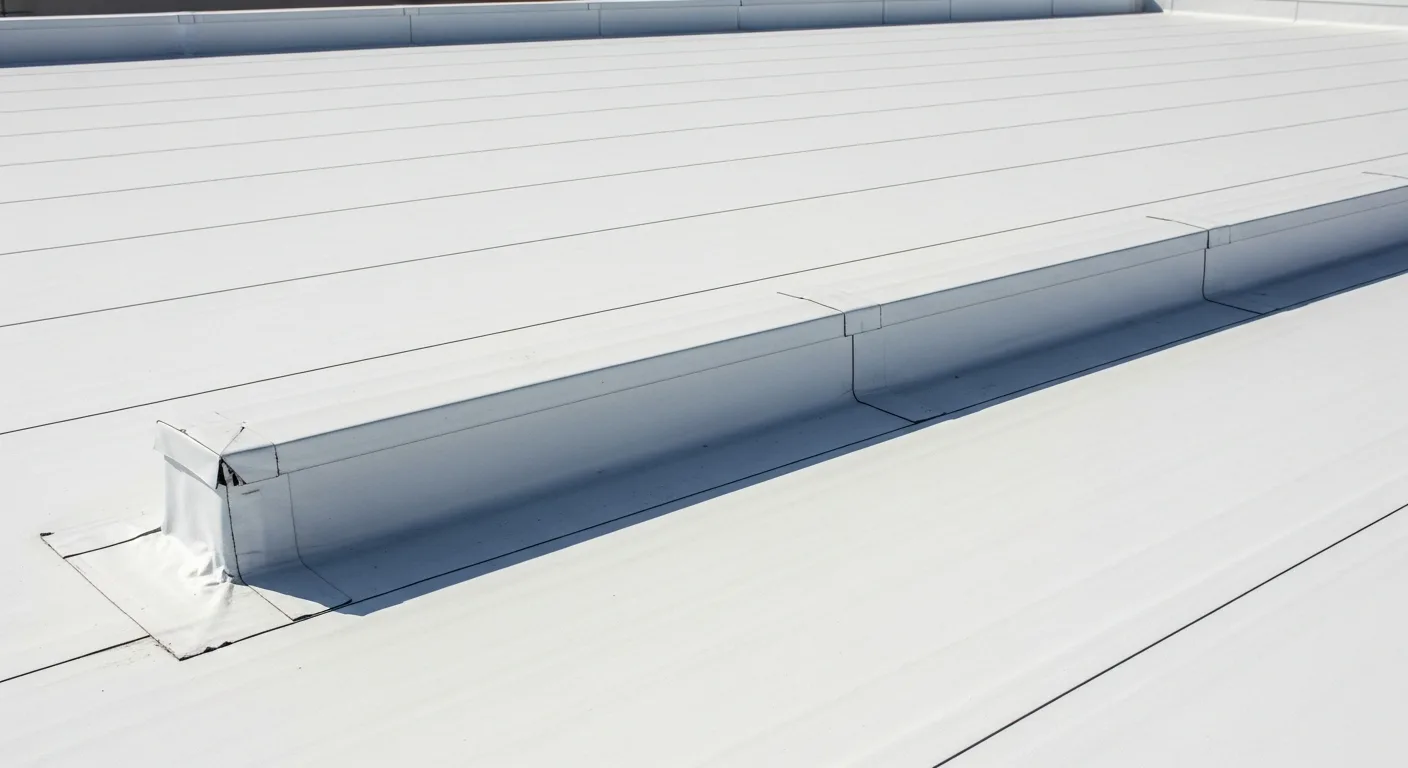
Why PVC Flat Roofing in Washington, DC?
PVC (polyvinyl chloride) is the premium single-ply membrane for applications requiring chemical and grease resistance. While TPO and EPDM are petroleum-based and can degrade around concentrated grease or chemical exposure, PVC is inherently resistant — making it the required membrane choice for restaurant-adjacent roofs, pool houses with chemical storage, and any outdoor kitchen or cooking ventilation application.
PVC roofing also carries the highest seam strength of any single-ply membrane when heat-welded — seams are actually stronger than the field membrane itself. Duro-Last's factory-fabricated PVC system takes this further by reducing field seams to near zero, as panels are custom-cut and welded to your roof's exact dimensions at the factory before delivery.
PVC Flat Roofing for DC Commercial and Row-House Applications
Washington DC's dense food-service corridor — Georgetown restaurant row, Adams Morgan, Penn Quarter, Navy Yard — generates significant demand for PVC flat roofing. Any building with rooftop kitchen exhaust venting is a PVC candidate: the grease-laden vapor that accumulates on the membrane around exhaust stacks will degrade EPDM and TPO over time but leaves PVC unaffected.
Georgetown restaurant row, Adams Morgan food corridor, Penn Quarter commercial; any DC building with rooftop kitchen exhaust; Duro-Last custom fabrication ideal for complex DC rooflines with party walls and multiple penetrations. Duro-Last's custom fabrication approach reduces field-seam count to near zero — factory-welded panels are cut and heat-fused to the exact dimensions of your roof before delivery, with pipe boots and other penetration fittings already attached at the factory. This is particularly valuable on complex DC rooflines with party wall jogs, multiple HVAC penetrations, chimney flashings, and skylight curbs.
Urban Access Considerations: DC PVC installations on commercial buildings typically require no-parking permits for staging, narrow-access equipment plans, and neighbor coordination for party-wall work. King's Roofing manages all of this coordination as part of the project.
DCRA Permits: DCRA building permit required for all DC roofing work. HPRB review typically not required for PVC membrane at non-street-visible applications. King's manages the full DCRA permit process.
Duro-Last Custom Fabrication: Why It Matters
Duro-Last is the leading custom-fabricated PVC roofing system in North America. Unlike standard PVC rolls that are cut and seamed in the field, Duro-Last panels are manufactured to the precise specifications of your roof at the factory — pipe boots, HVAC curb covers, drain bowls, and edge details are already factory-welded before the panels ship. The result:
- Field seam count reduced to near zero — the most common point of membrane failure eliminated
- Shorter installation time on your property — less rooftop traffic, less disruption
- Cleaner finished appearance — no visible field seam lines across the roof surface
- Complex rooflines with multiple penetrations handled correctly at the factory under controlled conditions
- 20-year manufacturer warranty backed by Duro-Last's contractor guarantee program
Internal Links for Your Washington, DC Roofing Project
- Roofing in Washington, DC — full roofing services overview for Washington
- Flat & Low-Slope Roofing — all membrane options for Washington
- Free Phone Consultation — schedule a no-obligation estimate
- All Roofing Services — complete service menu for the DC metro
DC Contractor Licensing & Compliance
King's Roofing holds a current DC contractor license issued by the DC Department of Consumer and Regulatory Affairs (DCRA) Business License Division — required for all roofing and home improvement work in Washington, DC. Our DC contractor license number is displayed on every Washington DC proposal and contract. You can verify our license status through DCRA's online contractor verification portal before signing any agreement.
DC roofing law requires that any contractor performing repair or replacement work on a DC property hold a valid DC business license AND a DC home improvement contractor registration. King's Roofing maintains both, along with $2 million general liability insurance and workers' compensation coverage for all crew members working on DC properties.
When hiring any roofing contractor in Washington, DC, always request: (1) DC contractor license number, (2) proof of current general liability insurance, (3) workers' compensation certificate. King's Roofing provides all three on request before project commencement.
Why PVC Outperforms TPO and EPDM in Chemical Environments
The chemical resistance advantage of PVC over other single-ply membranes is significant and measurable. EPDM is a petroleum-based rubber — concentrated grease, oils, and many commercial cleaning chemicals cause it to swell, blister, and lose its sealing integrity over time. TPO is also petroleum-based and shares this vulnerability. PVC, by contrast, is chemically distinct from petroleum-based membranes and resists degradation from:
- Cooking oils and grease from restaurant exhaust vents
- Petroleum solvents and fuels (relevant for parking structures and fuel-storage facilities)
- Pool and spa chemicals (chlorine, algaecides) for outdoor pool-house applications
- Commercial cleaning agents used on rooftop HVAC equipment
- Many industrial process chemicals
For any Washington, DC property with rooftop cooking exhaust, chemical storage below the roof plane, or pool equipment on or adjacent to a flat section, PVC is not just preferable — it is often the only membrane that will deliver full warranty-period performance without premature chemical degradation.
Common PVC Flat Roof Failure Modes in Washington, DC
PVC is the most durable single-ply membrane, but it is not failure-proof. The most common PVC failure points on Washington, DC flat roofs:
- Field seam failure at poorly-welded joints: PVC seams that were under-welded (insufficient heat, speed, or pressure) can delaminate over time. Duro-Last's factory-fabricated approach minimizes field seam count, reducing exposure to this failure mode.
- UV degradation on older PVC installations: PVC membranes installed before 2000 used plasticizer formulations that were more susceptible to UV-driven plasticizer migration. Modern PVC formulations (post-2005) are significantly more UV-stable. Older PVC may show surface crazing or brittleness — identifiable at inspection.
- Penetration boot separation: Factory-fabricated pipe boots are more reliable than field-cut and patched boots. PVC's higher temperature sensitivity (relative to EPDM) means penetration boots can separate slightly at extreme summer temperatures if not properly welded. Annual inspection of all penetration boots is recommended.
- Parapet terminations: Like all single-ply systems, PVC termination at parapet walls is a critical detail. Stainless-steel termination bars with silicone sealant are specified at all Washington PVC parapet terminations.
PVC Flat Roof Maintenance for Washington, DC Properties
PVC's durability does not eliminate the need for maintenance — but it reduces the frequency and cost of intervention compared to EPDM. King's Roofing recommends for Washington, DC PVC flat roofs:
- Annual inspection: Probe all seams (both field and factory seams), inspect all penetration boots, and check parapet terminations. PVC's 30+ year service life assumes annual inspection and minor maintenance.
- Chemical zone monitoring: For restaurant or pool-adjacent applications, inspect the membrane surface around grease exhaust and chemical exposure zones at each visit. Surface staining is normal; membrane swelling or lifting indicates the need for targeted cleaning or localized replacement.
- Drain maintenance: Internal drains and scuppers should be cleared twice per year — spring and fall. Blocked drains are the most preventable cause of premature PVC membrane stress.
King's Roofing offers annual maintenance programs for Washington, DC PVC flat roofs. Ask about maintenance plan options when you schedule your initial estimate.
Frequently Asked Questions — PVC Flat Roofing in Washington, DC
What does PVC flat roof installation cost in Washington, DC?
PVC flat roof installation in Washington, DC runs approximately $10,000–$16,500 installed for typical residential or small commercial flat sections (500–1,500 sq ft). Duro-Last custom-fabricated systems add a 2–3 week factory lead time and approximately 10–15% to material cost versus standard field-fabricated PVC, but reduce installation time and seam count. Final pricing requires on-site inspection and measurement.
How long does PVC flat roofing last in Washington, DC?
PVC membranes installed with heat-welded seams typically last 30+ years in DC metro climates. PVC is more UV-stable than EPDM and more chemically resistant than TPO. Duro-Last systems, which minimize field seams, consistently achieve the upper end of service life expectations. Most PVC installations carry a 20-year manufacturer warranty with real-world service of 30–35 years achievable.
Does PVC roofing require HPRB review in a DC historic district?
PVC roofing at non-street-visible flat sections typically does not require HPRB review — the membrane is hidden behind parapets or at rear sections where it is not visible from public ways. For any street-visible roofing change, King's Roofing assesses HPRB requirements for the specific property and manages the review process when required.
How long does DCRA permitting take for PVC flat roof installation in DC?
DCRA residential building permits for flat roof replacement typically take 4–8 weeks. King's Roofing submits through DC Access eServices and follows up actively. Permit cost is included in your project price. HPRB historic review is not typically required for PVC installation at non-street-visible flat sections.
Why is PVC important for Georgetown and Adams Morgan restaurants?
Restaurant kitchens with rooftop exhaust produce grease-laden vapor that lands on the roof membrane around kitchen exhaust stacks. EPDM and TPO are petroleum-based and can swell, blister, or degrade around concentrated grease exposure over time. PVC's chemical resistance to oils and grease makes it the correct membrane choice for any restaurant-adjacent flat roof application. Duro-Last's factory-welded pipe boots eliminate field splices around the highest-risk penetrations.
Ready to get a flat roof or metal roof estimate for your Washington, DC property? Call (703) 712-1506 or schedule a free phone consultation — we respond within one business day and can often inspect within the same week.