Flat Roof Repair in Washington, DC
EPDM, TPO, and modified bitumen repair for Capitol Hill, Georgetown, Shaw, and all DC rowhouse neighborhoods — DCRA permits handled, HPRB historic review managed.
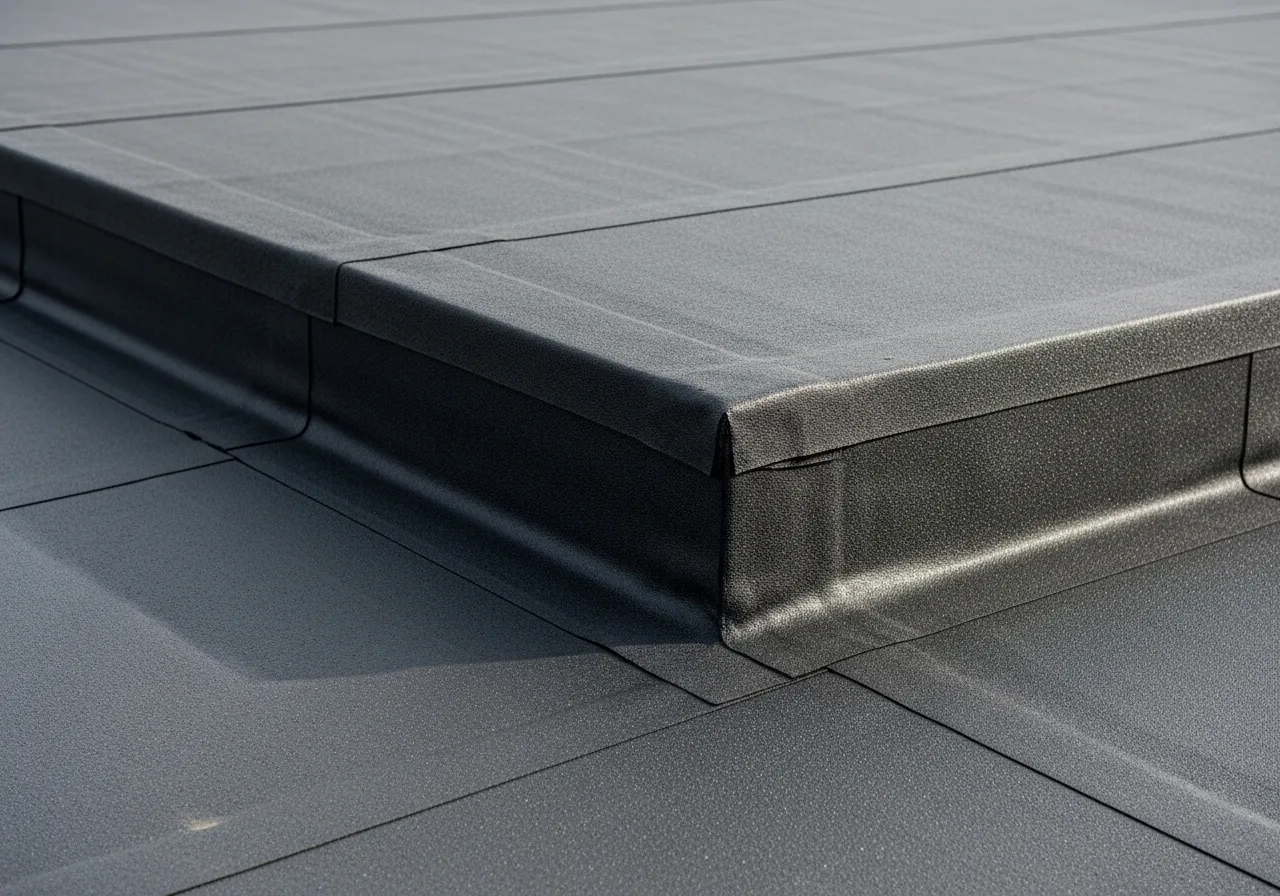
Washington, DC has the highest concentration of flat-roofed residential buildings in the mid-Atlantic. Federal and Victorian rowhouses across Capitol Hill, Georgetown, Shaw, Columbia Heights, Adams Morgan, and Dupont Circle depend on low-slope EPDM, modified bitumen, or TPO membranes to stay dry. Most of this flat-roof stock was installed between 1970 and 2005 and is now at or past its rated service life. King's Roofing performs flat roof repair and replacement across all DC neighborhoods — holding the required DC contractor license and managing DCRA permits and HPRB historic review.
DC's Flat-Roof Housing Stock: What Makes It Unique
The typical DC rowhouse has a combination roof: a steeply-pitched front slope over the main structure and a flat rear section over the back addition or kitchen extension. This flat section — usually 300–700 sq ft — is what we repair and replace most often. It is almost always EPDM on pre-2010 construction, modified bitumen on pre-1990 stock, and increasingly TPO on post-2010 renovations. DC rowhouses also commonly have flat garage roofs, stairwell bulkheads requiring custom flashing, and HVAC curb penetrations — each a separate potential leak source.
DC's urban heat island is one of the most pronounced on the East Coast. Summer roof surface temperatures on dark EPDM regularly exceed 170°F, stressing seams and parapet terminations. Winter brings periodic ice events that form dams at blocked drains on rowhouses with inadequate slope.
Common Flat Roof Failure Modes on DC Rowhouses
After repairing flat roofs across Capitol Hill, Georgetown, Shaw, and Columbia Heights for over a decade, the failure patterns repeat with consistency:
- Parapet wall cap-flashing failure: The lead-coated copper or aluminum cap flashing across the top of the parapet wall — where the membrane terminates and the masonry begins — is the single most common leak source on DC rowhouses. Freeze-thaw cycling loosens the cap, opens the joint between the cap and the counter-flashing, and water tracks down behind the masonry. The interior stain often appears on the front wall of the room below, 8–15 feet from the actual entry point. We replace parapet cap flashing on every full membrane job as a standard item, not an optional upgrade.
- Standing water from drain blockage: DC rowhouse internal drains are notorious for collecting debris — leaves from the urban canopy, gravel from degrading ballast on older systems, bird nesting material, and HVAC condensate deposits. A blocked drain accelerates membrane aging dramatically. DC code requires minimum 1/4-inch per foot slope; many 1970s–1980s rowhouse flat sections have inadequate slope and pond even with clear drains. We add tapered insulation crickets to correct this during full replacement.
- EPDM seam delamination on pre-2000 stock: EPDM installed before 2000 used liquid solvent-based adhesive at lap seams. This adhesive has a natural service life of 20–25 years, after which seams begin lifting and water tracks under the field membrane. A tape-seam retrofit — removing the old seam zone and re-bonding with butyl primer tape — is often cost-effective on otherwise sound membrane, adding 8–15 years of life without a full tear-off.
- Modified bitumen granule loss and seam cracking: Torch-applied mod-bit from the 1980s and 1990s shows characteristic surface cracking and seam separation as it ages. The granule surface erodes in DC's UV environment, leaving the bitumen layer exposed to direct sun. Targeted patch work using compatible torch-applied flashing material is the standard repair; when more than 30% of the surface is compromised, a silicone coating restoration or full replacement is more cost-effective.
- Stairwell bulkhead flashing: The flashing where the flat membrane meets the vertical walls of a rear stairwell bulkhead is consistently the first place a poorly-installed system fails. Water accumulates in the corner joint, freeze-thaw cycling moves the joint, and water tracks into the stairwell ceiling. We custom-fabricate the bulkhead flashing boot for each project — no generic boot fits DC rowhouse bulkhead geometry reliably.
DC Flat Roof Repair Costs in 2026
| Repair Type | Common Location in DC | 2026 Price Range |
|---|---|---|
| Active leak diagnosis & membrane patch | All neighborhoods | $350–$750 |
| Parapet wall cap-flashing replacement | Capitol Hill, Shaw, Columbia Heights rowhouses | $600–$1,500 |
| EPDM seam tape-retrofit (pre-2000 stock) | All neighborhoods with 1970s–1990s EPDM | $450–$1,200 |
| Drain replacement & re-flashing | All flat sections with internal drains | $500–$1,200 |
| HVAC curb re-flashing | Rowhouses with rooftop HVAC units | $400–$900 |
| Stairwell bulkhead flashing rebuild | Rowhouses with rear stairwell access | $550–$1,100 |
| Full EPDM replacement (400–700 sq ft) | Typical DC rowhouse rear section | $6,500–$11,000 |
| Full TPO replacement (400–700 sq ft) | Typical DC rowhouse rear section | $7,500–$14,000 |
| Emergency tarp installation (same-day) | All neighborhoods | $350–$650 |
DC pricing carries a modest premium over Northern Virginia due to DC contractor license requirements and DCRA permit timelines. We provide written, itemized estimates — no time-and-materials billing, no callbacks, no undisclosed costs after the estimate is accepted.
DCRA Permits and HPRB Historic District Review
All roofing work in Washington, DC requires the contractor to hold a valid DC business license and DC home improvement contractor registration — separate from Virginia and Maryland licenses. King's Roofing is fully licensed in DC. Full flat roof replacements require a DCRA building permit, which King's manages from online submittal through final inspection. DCRA residential permits typically take 4–8 weeks; we account for this timeline in project scheduling and do not start work before the permit is issued.
Properties in DC's many historic districts — Georgetown Historic District, Capitol Hill Historic District, Dupont Circle Historic District, Mount Pleasant, Kalorama, Logan Circle, LeDroit Park, and others — may require Historic Preservation Office (HPO) staff-level review or full HPRB board review for material or color changes on the roof. The key distinction: black EPDM replacing black EPDM is almost always approved by HPO staff without a board hearing. Switching from dark EPDM to white TPO on a visible roof section in a historic district may require full HPRB review and approval before DCRA issues the permit. We assess each property's historic status at the estimate stage and prepare the HPRB submittal when required — it does not add contractor fees to your project.
Neighborhood Coverage: Where We Work in DC
King's Roofing performs flat roof repair and replacement across all Washington, DC neighborhoods. Neighborhoods and ZIP codes we service most frequently:
- Capitol Hill (20002, 20003) — 1870s–1920s Federal rowhouses on East Capitol St, Pennsylvania Ave SE, and the Lincoln Park corridor; heavy EPDM and mod-bit stock
- Georgetown (20007) — Federal and Second Empire townhouses dating to the 1830s–1870s; Georgetown Historic District applies; slate, clay tile, and low-slope modified bitumen on rear sections
- Shaw / U Street (20001) — Howard Theatre area rowhouses, 1890s–1920s stock; large volume of aging EPDM on flat rear sections reaching end of service life
- Columbia Heights / Mount Pleasant (20010) — 14th Street corridor mid-rise and rowhouse mix; Meridian Hill Park area 1900s–1920s housing; high volume of repair calls after summer storm events
- Adams Morgan / Kalorama (20009) — 18th Street NW rowhouses; Kalorama Triangle; historic review common on Embassy Row-adjacent properties
- Dupont Circle (20036) — Embassy Row Victorian-era stock; Dupont Circle Historic District; HPRB review common
- Petworth / Brookland / Columbia Heights (20010, 20011, 20017) — 1920s–1940s semi-detached rowhouses; large volume of aging EPDM flat rear sections
Repair vs. Replace: The Honest Assessment for DC Rowhouse Owners
Most DC flat roof calls come in as leak investigations that could end in either a targeted repair or a full replacement recommendation. Our approach: a thorough assessment that gives you both quotes on the same visit. We walk the entire roof surface, probe suspect seams, check the drain condition, and inspect all parapet and penetration flashings before making any recommendation.
A properly targeted repair on a sound field membrane is the right answer in many cases — a 12-year-old EPDM with a separated parapet cap flashing is a repair, not a replacement. A 24-year-old EPDM with liquid-adhesive seams failing systemically is a replacement. We carry membrane patch kits for EPDM, TPO, and modified bitumen on every truck and can install a permanent patch on the same dispatch visit for most active leaks.